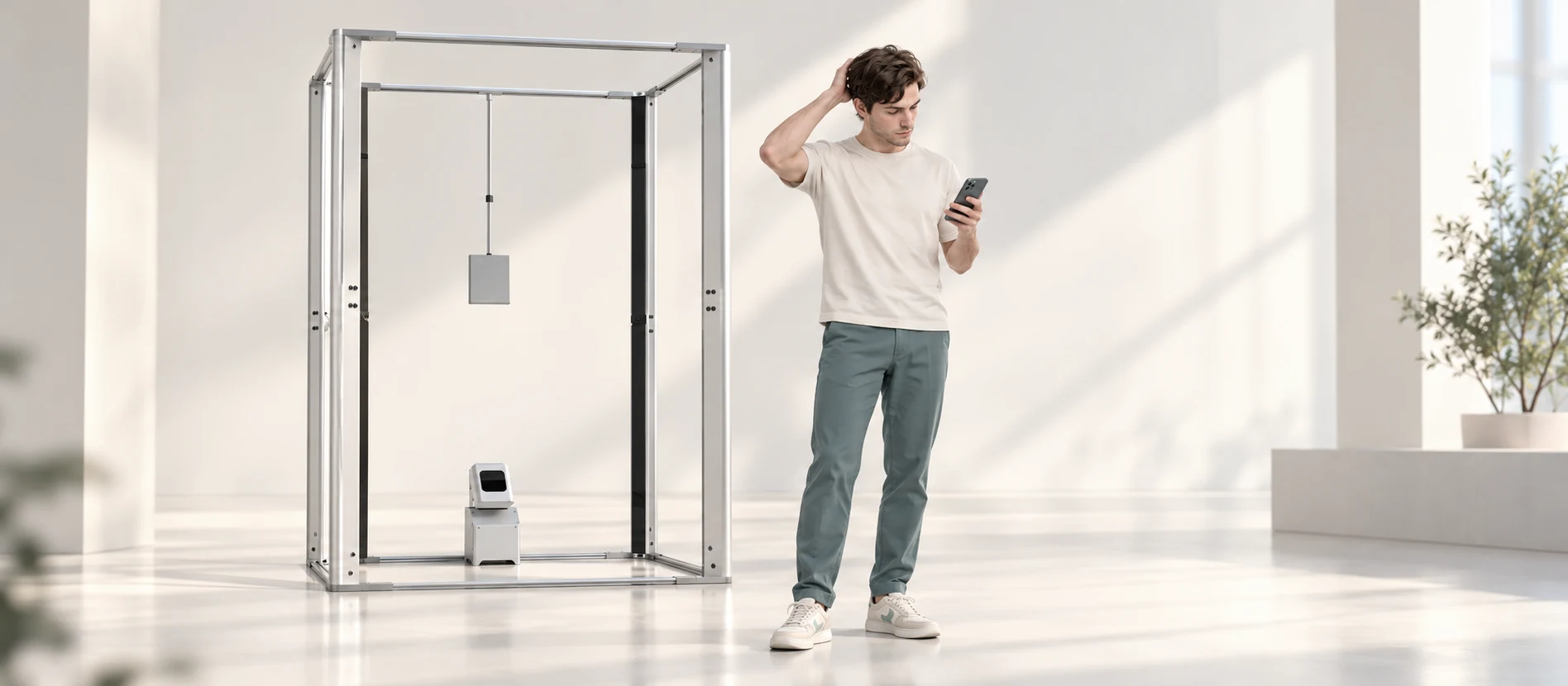
Mobile Scan is already an online service. People can take front and side photographs at home and obtain estimated measurements and body shape from those images. We have brought an experience that once required access to dedicated equipment to the smartphone at hand.
As part of my work on LiveAvatar/QM applications, I helped develop this way of sharing a digital body from home. This is the story of connecting bodies captured by scanners to a service people can use through photographs.
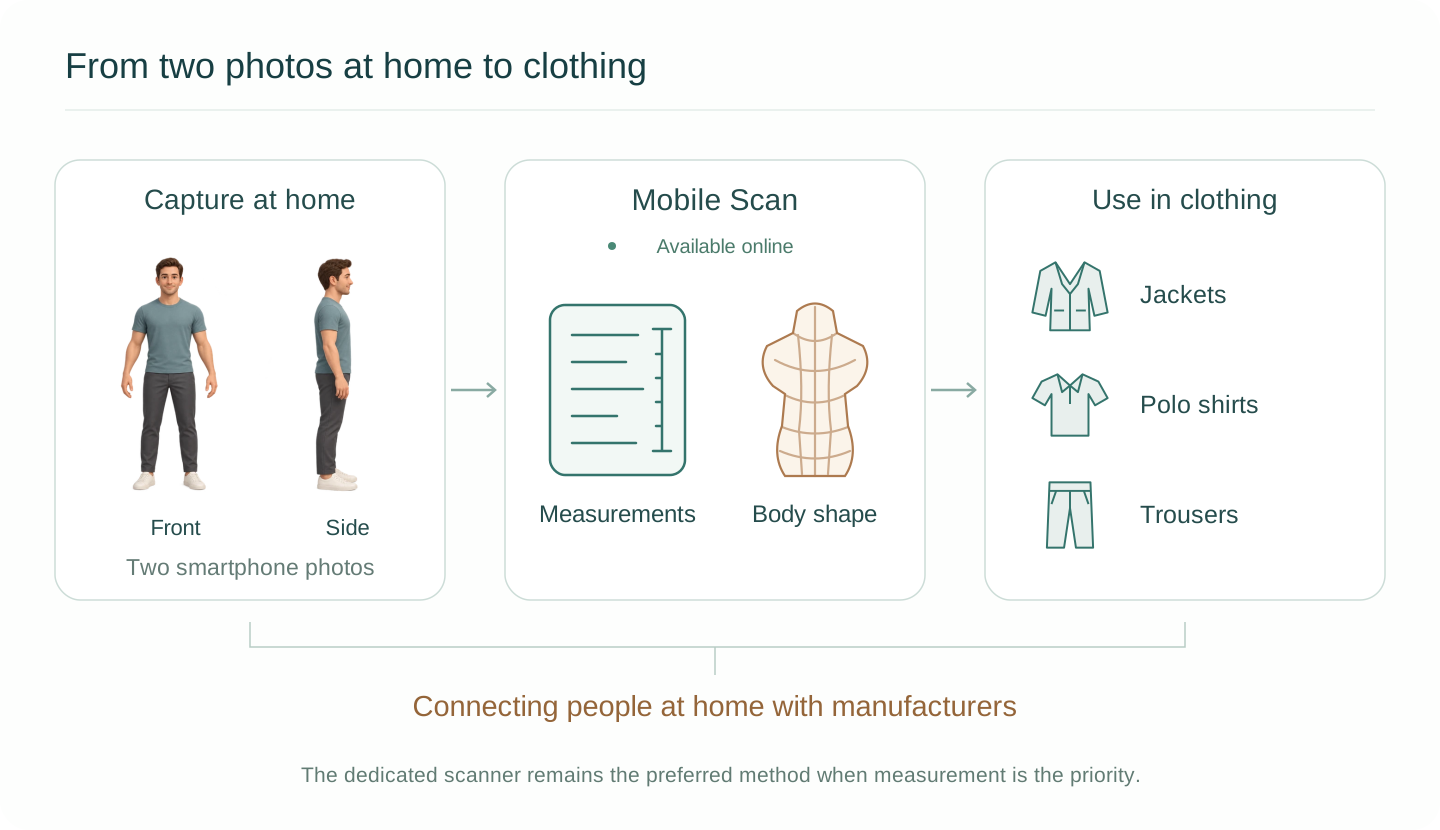
From two photographs to measurements and shape
A photograph shows the body from one direction. Front and side images provide the basis for estimating both the unseen shape and the measurements used in clothing.
That is why I want to show more than the appearance of a person: measurement data for the manufacturer, alongside a model that represents body shape. Both need to be explained through their intended uses.
Turning a decade of accumulated data into learning material
The scans handled by QM also became a foundation for learning to understand bodies from photographs. My challenge was to bridge the gap between accumulated three-dimensional bodies and the photographs people take at home.
I worked with synthetic data that accounted for variation in capture conditions, while developing ways to evaluate progress toward the target measurements and shape. The aim was more than making convincing images: it was preserving useful body information for learning.
Results approaching the scanner, with different roles
Through development, we reached measurements and body shapes quite close to those obtained with a scanner. For me, the achievement was making this accessible to end users at home.
TG3D continues to position the dedicated scanner as the optimal measurement method. That role can coexist with the convenience of Mobile Scan. I want the required measurement quality and the context of use to guide the choice.
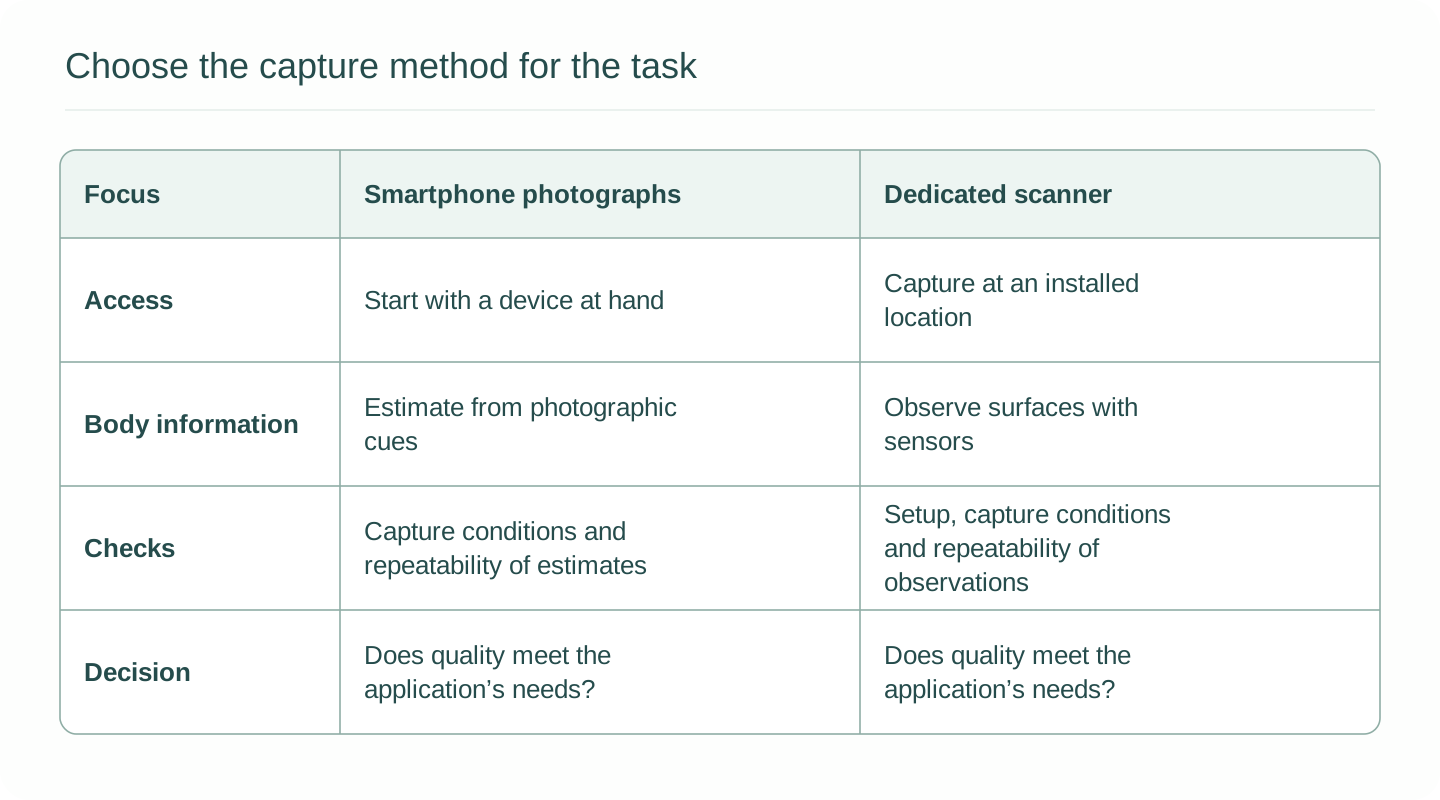
This comparison organizes how I think about applications: measurement with a scanner and access from home with Mobile Scan. Their roles inform the choice for each garment type and its required quality.
Connecting people at home with manufacturers
Suit jackets, polo shirts and trousers: for manufacturers delivering these garments, receiving body information from people at home has substantial value. It reduces the distance involved in bringing someone in for measurement and connects that information to garment production and delivery.
At present, Mobile Scan results are not suitable for applications requiring the close fit of wetsuits. The convenience of capture is valuable, and choosing which garments to use it for is part of that decision.
Even as measurements and shape become easier to obtain, people should be able to choose who receives them and how they are used. The question I explored in Privacy Scan continues here.
Next, I want to explore how this digital body could connect to experiences with motion.
The body series
Privacy Scan — How do we want our bodies represented?
The banner and the character in the diagram are AI-assisted illustrations. The data cards and garment icons describe outputs and uses.