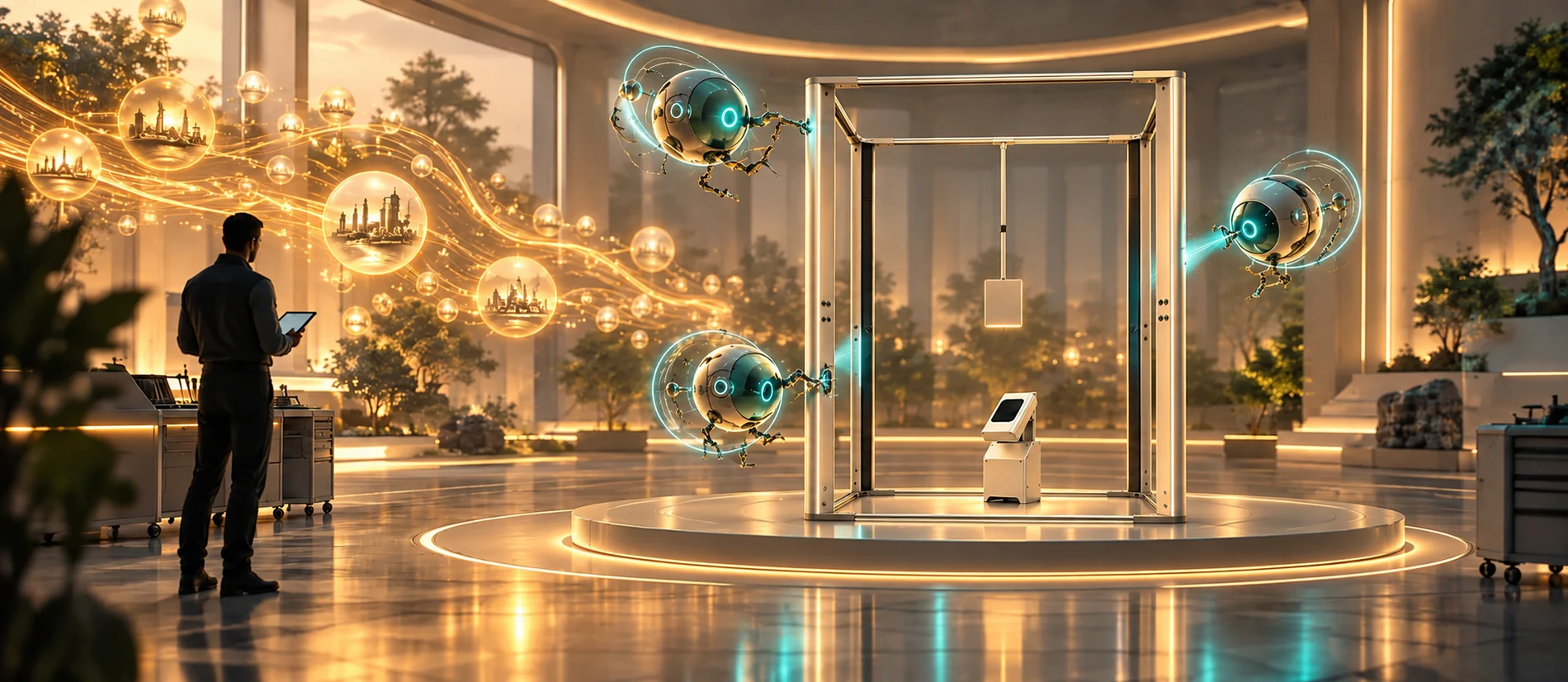
Previously, one person for several machines. Next, a team for one machine.
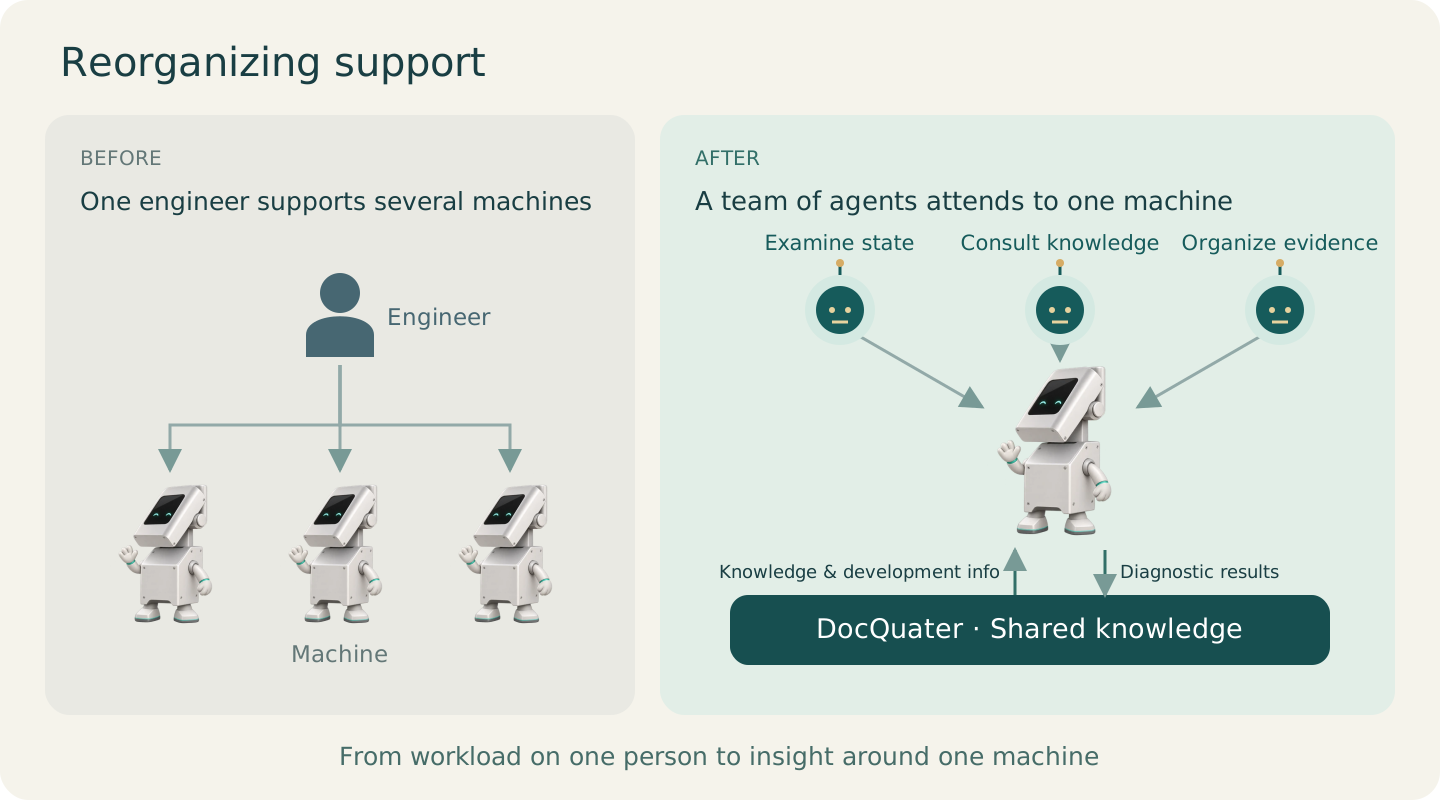
With Body Scanner Vet, I wanted to change the relationship between a machine and the people supporting it. The team here is not additional human staff: it is multiple sub-agents working on one machine’s problem.
Need — Change the time consumed by maintenance
One person supports several scanners. When something goes wrong, that person investigates the current state, searches for earlier context, handles the issue and checks the result. Maintenance could consume several days of one person’s time.
I could not keep absorbing that burden through individual effort alone. I wanted to be able to assemble a team around a particular machine as soon as it needed attention.
Challenge — Symptoms do not tell the whole story
A machine’s current symptoms and its history live in different places. Inspecting its present state alone is not enough; neither is rereading old documentation.
I wanted to bring together the organizational knowledge accumulated in DocQuater and the current conditions handled by Vet, so every investigation would not have to begin by searching one person’s memory.
Approach — Assemble a diagnostic team around one machine
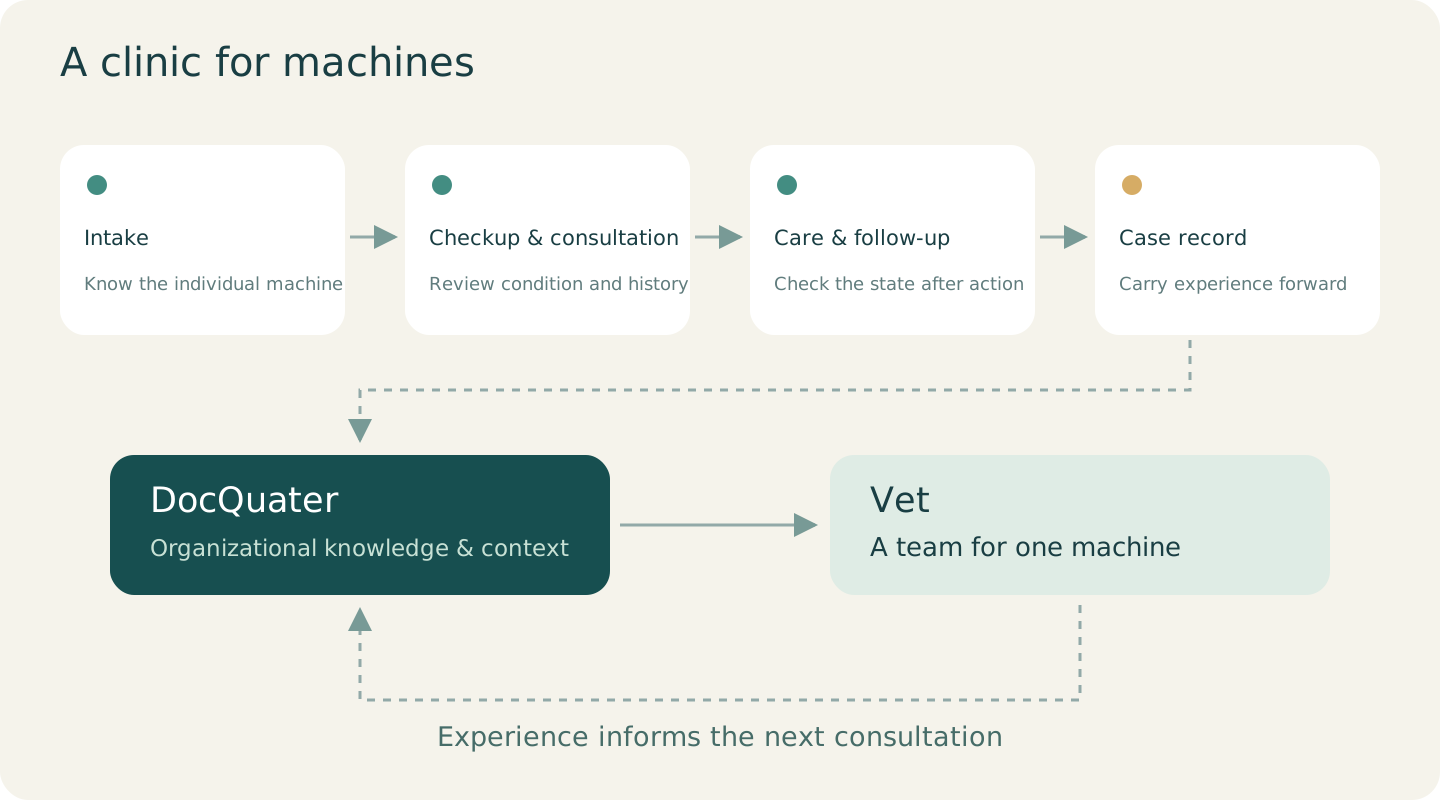
I think of Vet as a clinic for scanners. Intake establishes which machine we are dealing with; checkups and consultations examine its condition; follow-up checks establish what happened after an intervention. A machine becomes an individual with a history, rather than something to fix just this once.
When a machine has a problem, sub-agents divide the investigation: examining its state, consulting relevant knowledge and organizing the evidence for a decision. Bringing those perspectives together feels like a case conference, where different specialties consider the same patient.
As I distribute the investigative work, I still treat action on the physical machine and confirmation of the result as part of the job. Producing a plausible answer does not finish the consultation.
Learning — Carry one consultation into the next
The capability I want Vet to develop is the ability to use what one case teaches us when the next problem arrives. What happened, what was checked and where the useful clues were: recording verified findings lets a later investigation start from that experience.
In the clinic metaphor, DocQuater provides shared knowledge and case context, while Vet is the team examining the machine in front of us. Experience can pass to another agent instead of remaining in one person’s memory. That is the cycle I am cultivating when I describe Vet as self-learning.
The relationship with DocQuater goes beyond drawing on knowledge and development information. Vet also returns its diagnostic results to DocQuater, feeding knowledge that supports the next consultation.
Results — A different way to respond, within weeks
Over several weeks of development and introduction, the situation changed: instead of one person being consumed by days of maintenance, sub-agents could quickly get to work on a machine’s problem.
For me, the important change was broader than speeding up one task. Investigations I had carried sequentially could be divided, bringing the knowledge and perspectives needed for that machine together. I began thinking in terms of assembling a team around a machine, rather than adding people in proportion to the number of machines.
Next — Put the organizational brain to work in the field
In the DocQuater article, I wrote about making organizational memory something we can ask. With Vet, I am connecting that memory to the work of supporting a machine that needs help.
I want to keep improving the cycle in which each consultation adds knowledge for the next. My aim is a diagnostic team that becomes more capable with experience, rather than maintenance that becomes more exhausting as the fleet grows.
The banner is AI-generated concept art based on the scanner’s appearance. In the diagram, a small Scanner P character represents the machine as a patient, with agents as its diagnostic team.